A Marathon and Parkinson’s — Two Tough Journeys
A marathon and Parkinson’s share something in common: they are both long, demanding journeys that can be managed with the right learning, pacing, and planning.
When you’re newly diagnosed, it can feel like you suddenly need to understand everything about Parkinson’s. But you don’t. Parkinson’s is a chronic condition with no known cure (yet), and it usually changes slowly over time. You learn what you need as you go — just like I did when training for the three Melbourne Marathons I completed.
When I took my first training steps, I didn’t have to worry about my 500th or 1000th step. All I had to focus on was the step I was taking right now. Yes, I needed awareness — slippery surfaces, potholes, uneven ground, my shoelaces tied properly, and other runners around me — but only the current step needed my full attention. At most, the next one or two.
The next 42 kilometres were exactly the same.
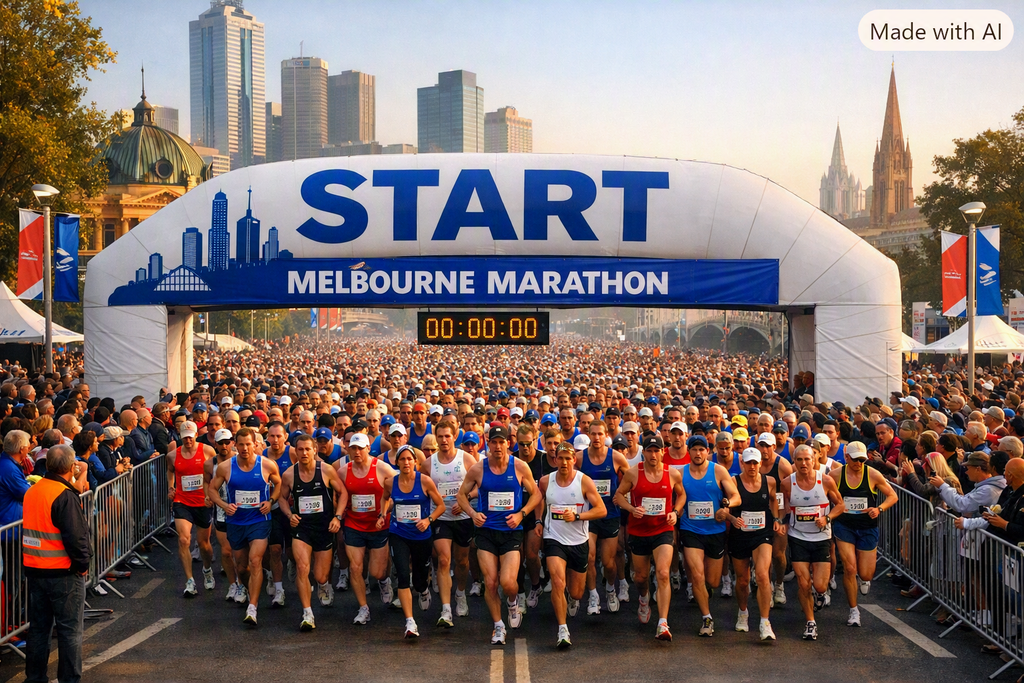
Some people call it being present, mindfulness, or simply concentration. Whatever the name, you need something to anchor you, because 42 kilometres is a long way — and just like Parkinson’s, your body, your energy, and the terrain beneath you are constantly changing.
Once I got through the first mad dash — that chaotic surge where runners sprint off the start line at a pace no one can sustain — I settled into what I think of as a meditative rhythm. I counted in my head like a musician keeping time, each number matching the beat of my footsteps. It kept me steady, focused, and moving forward.
Parkinson’s has become a similar journey for me: one step at a time, one moment at a time, with awareness, pacing, and a bit of Mongrel spirit.
Committing to the First Marathon
Looking back at my first marathon, I can still remember the excitement of signing up — that moment of committing to something big. Not long after, the doubts arrived: What have I done? Will I actually be able to run that far? For a short time I was unsettled, having all sorts of internal conversations with myself. Eventually, one realisation cut through the noise:
I need a training plan.
A little while later, I downloaded an 18‑week marathon program put together by Steve Monaghetti — one of Australia’s most accomplished long‑distance runners. That plan became my anchor. I started running the suggested distances, week by week, and slowly built confidence in my ability to stay the course.
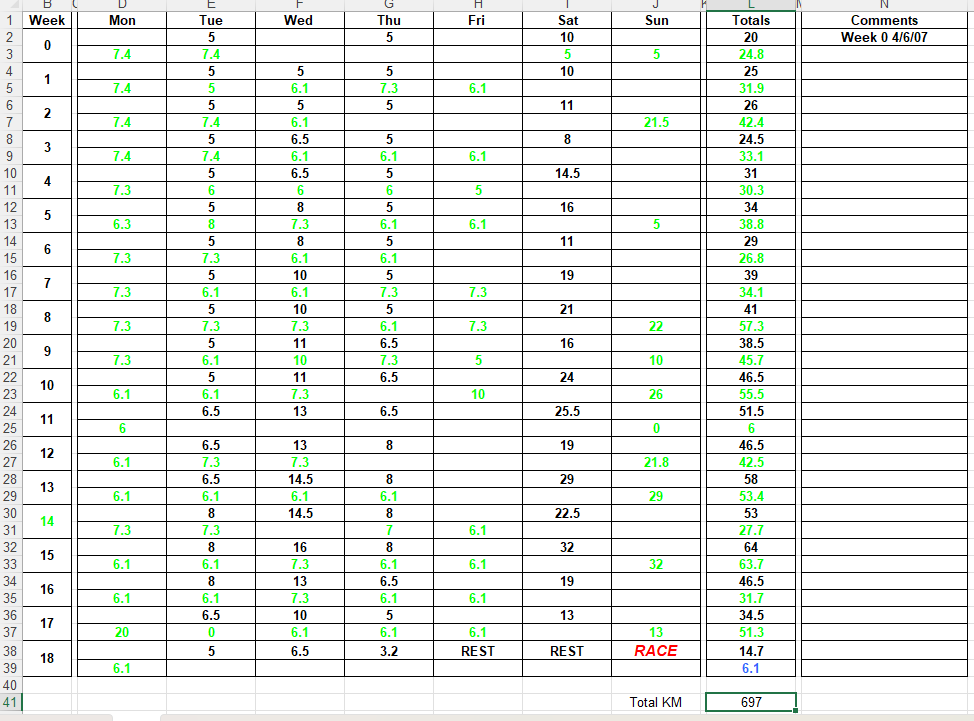
My Training – Planned and Actual
The first marathon I tackled was the Frankston to Melbourne event. Frankston is a bayside suburb about 35 km from Melbourne, and my training became very real when I began incorporating train trips out to stations along the Frankston line. Each week, I’d travel a little further out, hop off the train, and run home — covering sections of the exact course the marathon would use.
It served two powerful purposes:
a) It built confidence in my ability to handle longer distances.
b) It gave me firsthand experience of the course — the terrain, the rhythm, and what it would take to reach the finish line from each point.
Those runs taught me that preparation isn’t just physical. It’s mental. It’s emotional. It’s learning the landscape, understanding your limits, and discovering how far you can push them.
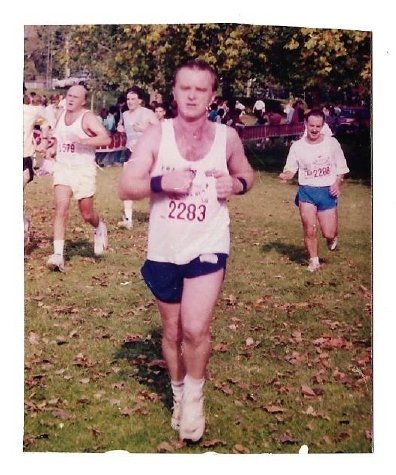
Puffing Billy “training” run – Daryl Kennedy
⭐ “Marathon Training & Parkinson’s:
The Same Long Road”
Preparing for a marathon was serious business for me. I’d always enjoyed sport and physical activity, but I had no experience over long distances. Every experienced runner I spoke to said the same thing: your result is a reflection of your training.
Trying to follow a structured program while working a demanding job — including out‑of‑hours recall — was tough. I’d plan my runs, only for unexpected interruptions to throw everything out. Still, for my first marathon I set myself a goal: finish under four hours. I trained as consistently as I could.
Looking back now, I can see clear parallels between marathon preparation and living with Parkinson’s. With PD, I’ve had to acknowledge the symptoms I’m facing on any given day and work with my medical team to form a plan so I can function as well as possible. That works for Day 1 — but PD is a progressive neurological condition. It changes over time, challenging both body and mind.
Marathon training also changes. Weather shifts. Injuries appear. Muscles complain. Courses get altered. For PD, the variables are different: medication On/Off times, how stress affects symptom control, interactions with other illnesses like colds or flu.
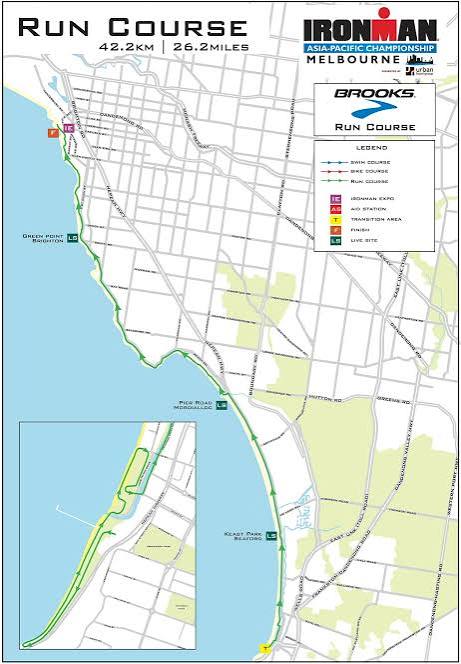
“Map courtesy of Ironman Asia‑Pacific Championship Melbourne”
In both cases, the answer is flexibility. Adjust the plan. Stay positive. Keep moving.
But PD has non‑negotiables:
- take medication exactly as prescribed
- take it on time, every time
- keep your medical team informed of any change
Life still happens — you might miss a dose, or notice a new symptom even when sticking to the routine. The easiest thing to do is quit. In marathon terms, that might mean forfeiting the entry fee or losing face with running buddies. In PD terms, the consequences are far more personal: increased tremors, deteriorating posture and gait, speech issues, withdrawal from social interaction.
Just like marathon training, PD requires a steady, methodical approach. Measuring symptoms and recording changes from baseline doesn’t just track progression — it can show improvement, stability, and the fact that you’re holding back the disease. PD can be managed, and that is a crucial point.
Never give up. I can’t stress that enough.
⭐ Race Day — Frankston to Melbourne
I remember arriving in Frankston on race morning, butterflies in my stomach. The first challenge was mental: talk yourself up. I moved among runners ranging from first‑timers to “Spartans” who had completed ten or more Melbourne Marathons.
Pacemakers stood with flags showing target times. I joined the 3h45m pacer, aiming to stay with him to achieve my sub‑4‑hour goal.
When the race began, it felt like just another training run — except surrounded by runners of all shapes and sizes. My pacer said, “Stick with me. Don’t let yourself fall back.”
After a few kilometres, I reached familiar territory and knew exactly where I was and how far I had to go.
I focused on my foot placement and kept a metronome‑like rhythm in my head. Everything went smoothly until around 38 km, when I hit the wall I’d heard about but never truly experienced. My legs were screaming. Mentally, the challenge was enormous.
I tried walking a few steps, but my mental toughness kicked in: Don’t give in. You’ll feel worse. You didn’t train all those hours to throw in the towel now.
Spectators urged us forward, cheering like we were celebrities. Someone handed me a small pack of jelly beans — the sugar gave me a little boost.
Determined, I pushed through St Kilda and onto St Kilda Road for the final stretch. The winds blowing off Port Phillip Bay nearly knocked me sideways, funnelling between the buildings along Melbourne’s premier boulevard.
The 3h45m pacer had pulled away, so I was on my own. But the crowd lifted me. I even found a little extra pace from somewhere deep inside.
I crossed the line in 3h56m. I’d achieved my goal. Tears welled up then, just as they do now while writing about it.
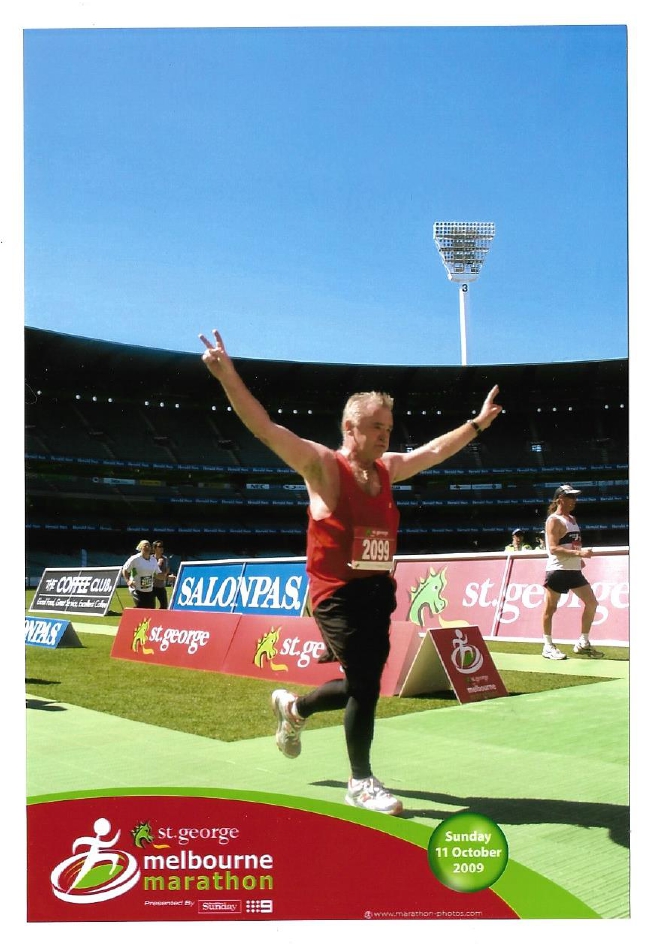
A big finish on the MCG 2009 – a relief and elation all in one
⭐ The PD Parallel — A Plan Only Works When You Use It
Just as I had a well‑rehearsed plan for marathon day, I now have a well‑rehearsed plan for managing PD. But a plan is only a plan until you use it. That’s when it comes alive and carries you through.
Sometimes extra support is needed — new medication, adjusted timing, therapy, buddy groups, or simply a phone call from someone who cares. I’ve learned to stay open to receiving support and acting on it.
Maintaining a positive outlook and a solid routine is the PD equivalent of the marathon training program. It’s the key to winning — to living well — while managing my condition.
I hope that in reading this, others feel inspired to take charge and realise their own full potential.
Best wishes,
Daryl “Shaking Mongrel” Kennedy
Aug 2026
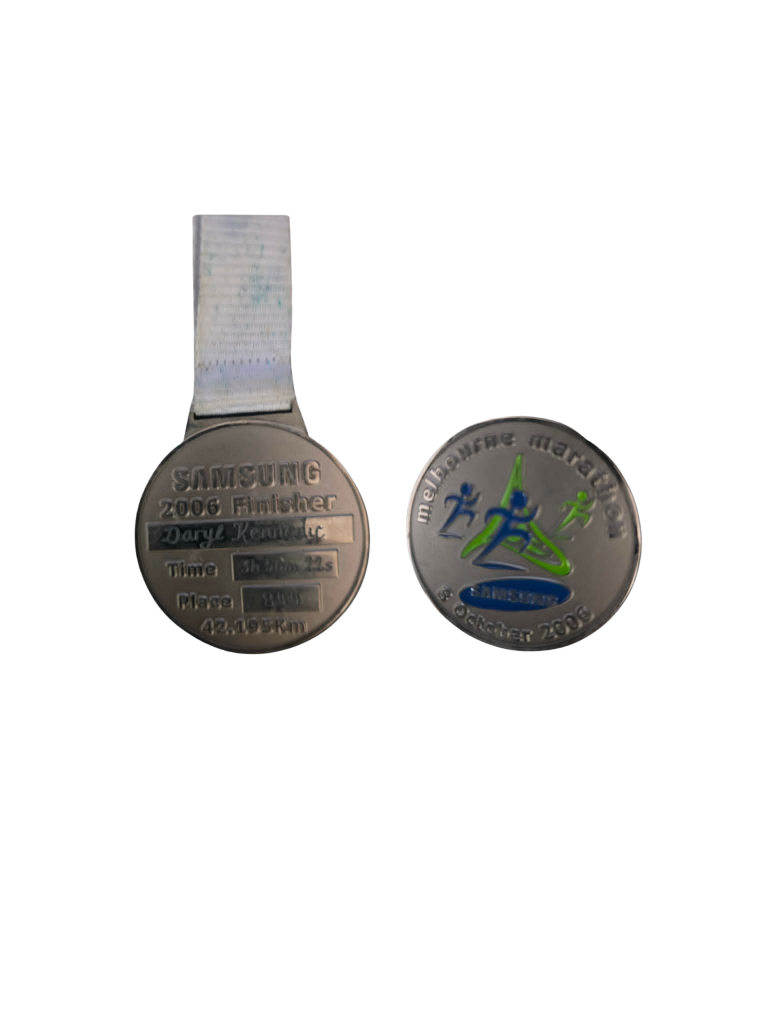
Finishing Medallion 2006 – very proud moment